
 Picture this: you’re planning a 60-person corporate picnic at East Coast Park. Half your guest list is Muslim. Three guests are vegetarian. One has coeliac disease. One more keeps vegan. Getting this wrong means someone sits with an empty plate while everyone else eats — or you end up juggling three separate caterers.
Singapore’s multicultural guest lists make this scenario routine, not exceptional. The demand is real. The solutions exist. But finding a single catering partner who handles all of it cleanly — halal-certified, dietary-specific, picnic-ready — requires knowing exactly what to ask for and who to ask.
This guide covers what customizable dietary-specific halal catering looks like in Singapore, which formats work for which events, and how to get it right from the first enquiry.
Why Dietary-Specific Halal Catering Matters in Singapore
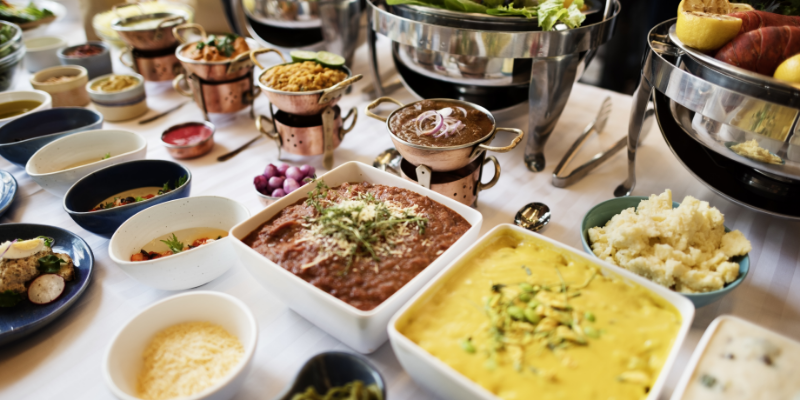
Singapore’s population spans multiple ethnicities, religions, and increasingly, lifestyle-driven food choices. When you host a corporate lunch, a community event, or an outdoor gathering, your guest list almost certainly includes Muslims who require halal-certified food, vegetarians, and people avoiding gluten for health reasons.
The practical consequence is significant. If your catering isn’t halal-certified, Muslim guests can’t eat from the same buffet line as everyone else. That means either separate orders (expensive and logistically awkward) or guests going hungry. As one industry source notes, halal certification “opens doors to a larger range of customers” and functions as a baseline inclusivity requirement for event planners managing diverse groups, not a premium add-on.
The market has responded. Catering companies across Singapore have expanded menus to cover vegetarian, vegan, gluten-free, and low-sugar requirements alongside halal certification. The formats available — from full buffets to individual bento boxes to picnic bundles — now accommodate most combinations a planner will encounter.
What “Customizable Halal Catering” Actually Means
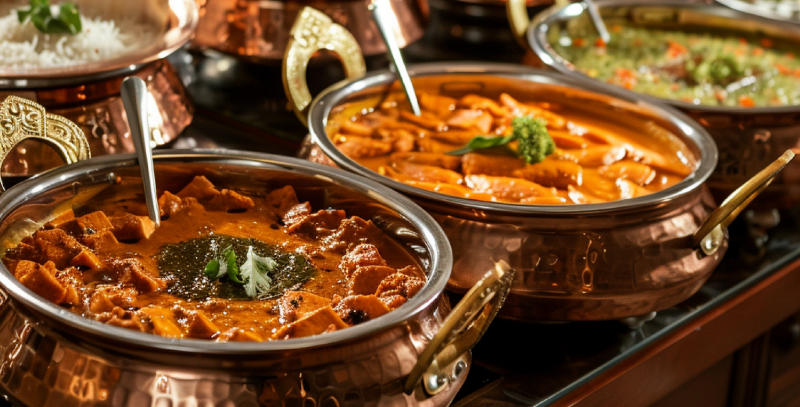
Customizable halal catering doesn’t mean you design the menu from scratch. In practice, it means a provider holds MUIS halal certification (covering ingredients, kitchen preparation, and delivery), offers stated dietary variants, and allows you to specify requirements at the point of booking.
The key variables you can typically adjust:
- Protein substitutions: swap meat for tofu, tempeh, or mushroom-based proteins for vegetarian guests
- Spice level: low-spice or no-spice variants are standard across most Singapore halal caterers
- Sauce and marinade ingredients: relevant for gluten-free guests, since soy sauce and oyster sauce are common hidden gluten sources in Southeast Asian cooking
- Portion format: individual bento boxes, shared trays, or buffet-style — different formats suit different events
What customization does NOT usually mean: unlimited menu redesigns on short notice. Most providers work from defined menus with stated variants. Flag all dietary requirements when you book, not two days before delivery.
Vegetarian & Vegan Halal Options
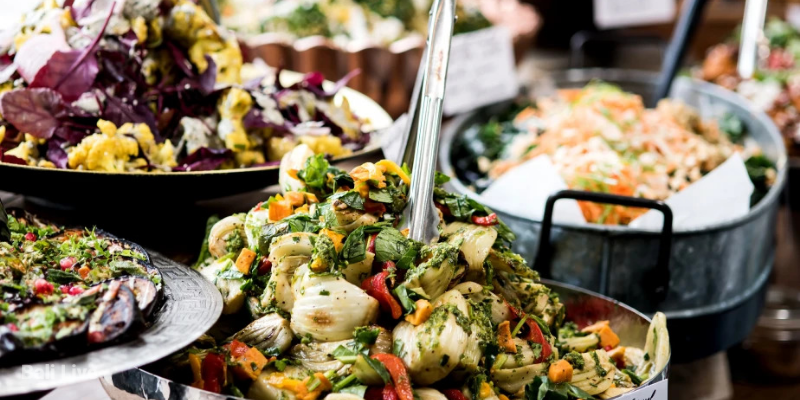
Vegetarian halal catering is straightforward in concept but requires attention to cross-contact. A halal-certified kitchen handles meat. For strict vegetarians or vegans, you want confirmation that vegetarian items are prepared with separate utensils and not cooked in shared oil or on shared surfaces with meat products.
Several Singapore halal caterers offer vegetarian options upon request, including vegetable curries, tofu-based dishes, and plant-based stir-fries. Vegan requests require the additional step of confirming no dairy or egg is used in preparation — which narrows the field further but remains achievable with advance notice.
For buffet formats, vegetarian and vegan dishes should be clearly labelled at the serving station. For bento formats, separate boxes with clear labelling make distribution straightforward when you’re managing a mixed group.
Singapore’s plant-based dining scene has grown substantially, with restaurants spanning Chinese, Korean, Japanese, Indonesian, and Indian cuisines. That demand has filtered into catering — halal caterers now field vegetarian and vegan requests as standard, not as unusual accommodations.
Gluten-Free Halal Catering
Gluten-free halal catering is the most technically demanding combination. Singapore’s local cuisine relies heavily on soy sauce, oyster sauce, and marinades that frequently contain wheat. Even dishes that appear naturally gluten-free — satay, rendang, nasi goreng — may contain gluten through the sauces or seasonings used in preparation.
For a guest with coeliac disease (as opposed to a gluten preference), cross-contamination is a genuine health risk. Shared fryers, shared woks, and shared preparation surfaces can all introduce gluten into an otherwise wheat-free dish.
What to ask a caterer when you need gluten-free halal meals:
- Which menu items are certified gluten-free or prepared without gluten-containing ingredients?
- Are those items prepared on separate surfaces with clean utensils?
- Is gluten-free tamari used in place of soy sauce, or are dishes avoiding soy sauce entirely?
- How are gluten-free items labelled at delivery?
Naturally gluten-free dishes common in halal Southeast Asian cooking include rice-based mains, grilled proteins without soy-based marinades, vegetable dishes prepared with rice flour, and South Indian options like rice and lentil preparations. A provider who understands the cross-contamination issue will give you specific answers, not a general assurance.
Picnic & Outdoor Halal Catering
Picnic catering sits at the intersection of format and logistics. The food needs to travel well, stay at safe serving temperatures without electrical warmers, and be easy to distribute without full table setup.
The formats that work best for Singapore outdoor events:
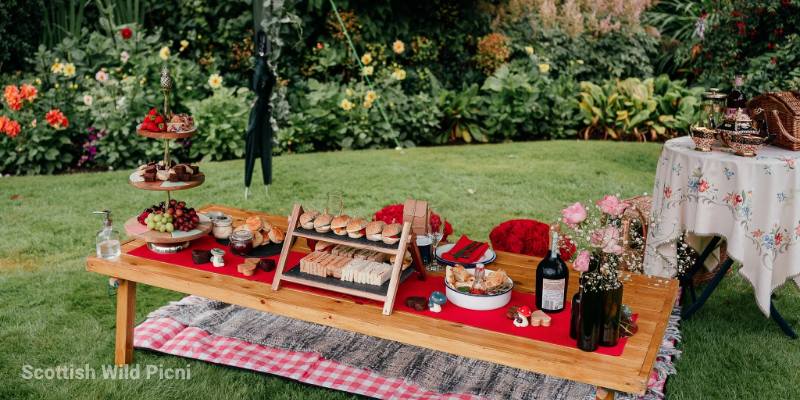
Individual packed meals / bento boxes: Each guest receives a sealed box. No serving queues, no cross-contact between dishes, easy to label dietary variants. Self-heating bento sets are available from some providers, heating without a stove or microwave — useful for picnic settings where no power access exists.
Mini buffet drop-off: Food delivered in disposable trays with no formal setup required. Suited for picnics where a casual shared-meal format is preferred. No food warmers or skirted tables — guests serve themselves from shared trays.
Halal picnic food bundles: Some providers package finger foods, wraps, and cold items as picnic-specific bundles. These typically include a mix of savoury bites and light desserts, pre-portioned for easy handling outdoors.
Common Singapore outdoor event venues — East Coast Park, Pasir Ris, Sentosa, condo function lawns — each have different logistics. Sentosa carries a location surcharge with most caterers. Check access points for delivery vehicles before confirming an order.
For picnic formats, ordering individual bento boxes rather than shared trays keeps dietary separation clean. A vegetarian guest gets their labelled box; a gluten-free guest gets theirs. No risk of dishes mixing at a shared tray.
Halal Bento Boxes for Corporate Events
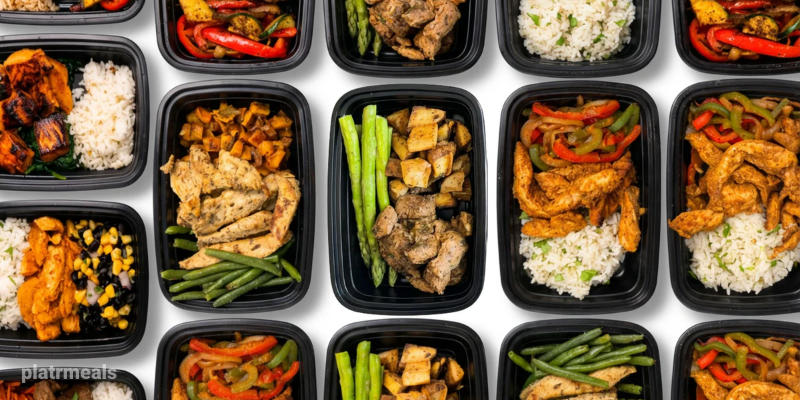
Bento boxes have become the default format for Singapore corporate catering: seminars, training days, town halls, AGMs, and team lunches. They’re practical. Each person gets a complete meal. Distribution is fast. Dietary variants are easy to segregate.
For halal corporate bento catering, the standard offering is a main protein, rice or noodles, one or two sides, and sometimes a dessert or drink. Price benchmarks in the Singapore market run broadly from $10 to $30 per pax depending on menu tier and provider.
Intercontinental Catering’s Classic Bento Box is positioned for exactly this use case — individual packed meals suited to seminars, corporate delivery, and institutional events. For events that require something more layered, the Hari Raya Mini Buffet and Hari Raya Special Canape Buffet formats show the range of event-specific packages available across different occasions.
When evaluating halal bento providers for corporate events, confirm:
- MUIS halal certification (not just “halal-friendly” sourcing)
- Minimum order quantities — some providers start at 10 pax, others at 30 or 50
- Whether dietary variants (vegetarian, gluten-free) are available at no extra charge or at a surcharge
- Lead time — most Singapore halal caterers require 3 to 5 working days minimum; festive periods require weeks of advance booking
Who Provides These Services in Singapore
The Singapore halal catering market includes several established providers. Below is an honest overview of the main options, starting with Intercontinental Catering as the publisher of this guide.
Intercontinental Catering
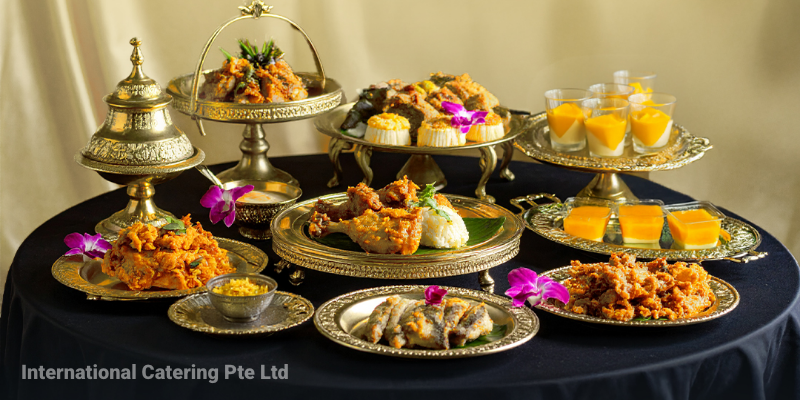
The most relevant starting point for readers of this guide. Intercontinental Catering offers halal catering formats including the Classic Bento Box for individual packed meals, Hari Raya Mini Buffet and Hari Raya Special Canape Buffet for festive event formats, and full buffet catering with complete table setup. For events mixing corporate delivery needs with festive or occasion-specific menus, their format range covers most scenarios a Singapore event planner will encounter. Contact directly to confirm dietary-specific variants (vegetarian, gluten-free) for your specific order.
Four Seasons Catering
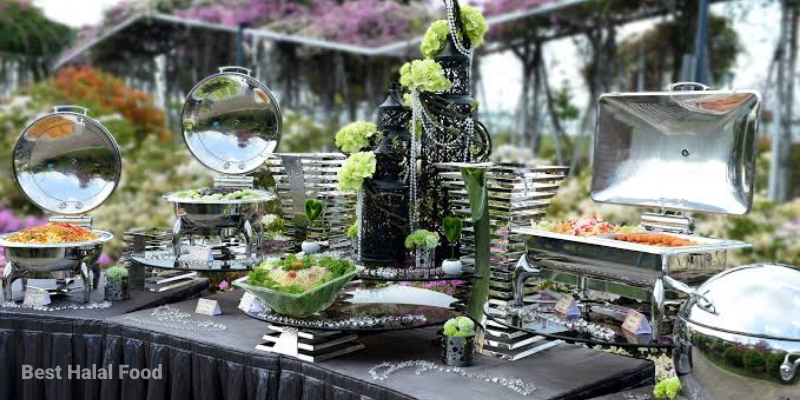
MUIS halal-certified since 1994. Explicitly offers vegetarian, gluten-free, and low-sugar menu variants. Formats include full buffets, mini buffets, bento boxes, and high tea. Pricing spans $5 to $40+ per pax. Delivery charges approximately $50 to $80 depending on format and location.
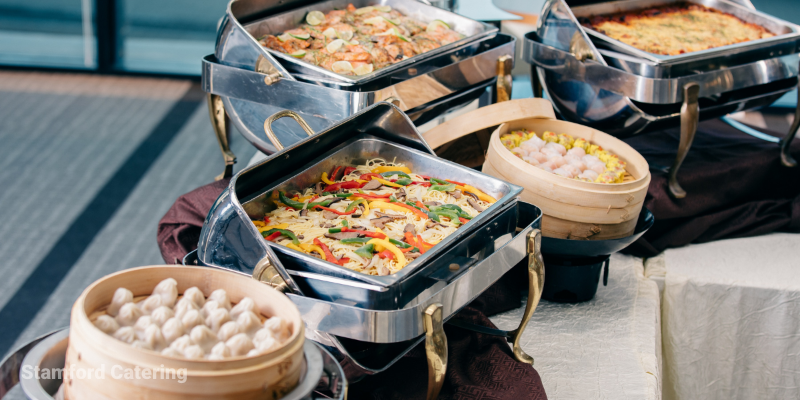
Stamford Catering
Over two decades of operation. Vegetarian and vegan bento sets confirmed available. Two bento tiers: Premium (curated by executive chef, suited for seminars and corporate meetings) and Value (budget-friendly daily sets for high-volume orders). Suited for large corporate functions where consistency across volume matters.
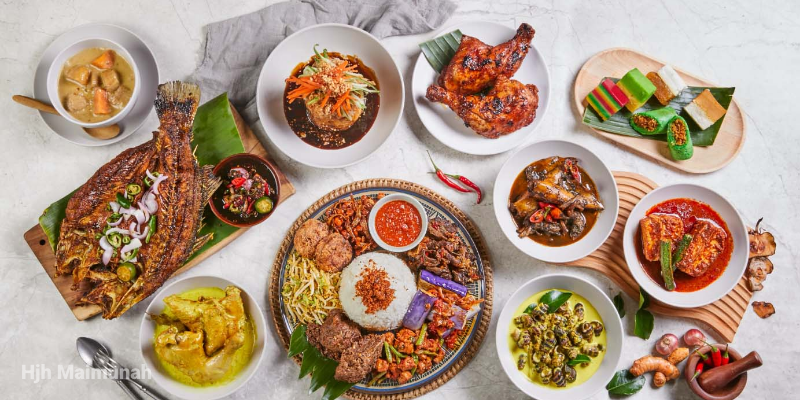
Hjh Maimunah
Halal-certified since 1992, Michelin Bib Gourmand holder. Vegetarian and no-spice options available on request. Buffet packages from S$12 per pax (tea-time) to S$35 per pax (festive). Bento boxes offered for offices and schools. Add-on services include on-site setup and warming trays.
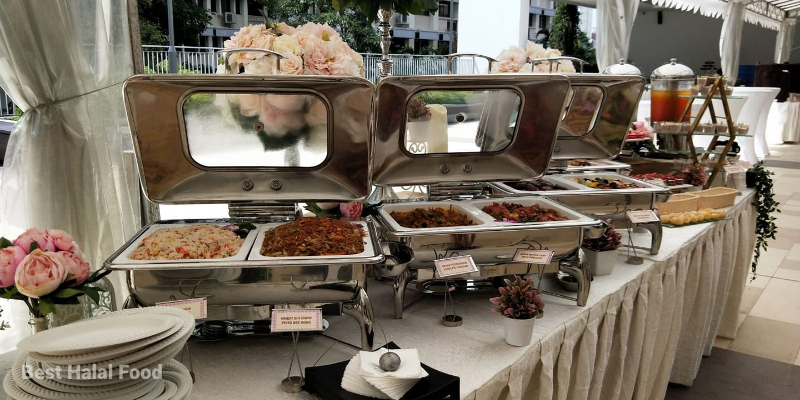
Eatz Catering
MUIS halal-certified, SFA-licensed kitchen. Mini buffet format from 8 pax. Self-heating bento sets available — relevant for outdoor and picnic settings without power access. Island-wide delivery.
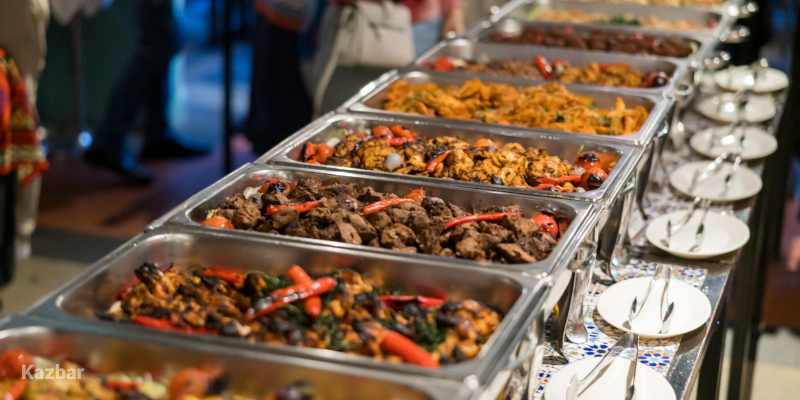
Kazbar
Dietary scope covers vegetarian, vegan, gluten-free, and nut-conscious menus. Halal-friendly arrangements possible through approved partners — requires early flagging. Lebanese-led kitchen. Corporate catering from SGD 50 per pax. Lead time 3 to 5 working days for standard orders.
How to Order & What to Prepare
Getting dietary-specific halal catering right comes down to what information you provide at booking. Caterers plan safe substitutions and labelling based on the brief you give them. A vague request handled late creates problems. A specific request handled early gets accommodated cleanly.
Before you contact a caterer, have this ready:
- Total guest count and breakdown by dietary requirement (how many vegetarian, vegan, gluten-free, etc.)
- Event date, time, and venue — including access details (lift availability, restricted zones)
- Format preference: individual bento, mini buffet drop-off, full buffet, or picnic bundle
- Whether outdoor or indoor — outdoor picnic settings affect packaging and heating requirements
- Budget per pax
When you speak to the caterer, confirm:
- MUIS halal certification status
- Whether dietary variants are prepared with separate utensils and surfaces (critical for coeliac guests)
- How dietary-specific boxes or trays are labelled at delivery
- Minimum lead time for your order size and event date
- Delivery charges, location surcharges, and GST inclusion in quoted prices
For mixed dietary groups, individual bento boxes with clear labelling on each box are the most reliable format. They prevent cross-contact, simplify distribution, and make dietary tracking at the event straightforward. Shared buffet trays work well when the entire group shares the same dietary requirements.
Book early. Five working days is the minimum for most Singapore halal caterers under normal conditions. Festive periods — Hari Raya, Chinese New Year, Christmas — require several weeks of advance notice.
The next step is a direct conversation with a provider. For events where Hari Raya, corporate delivery, or bento formats are part of the picture, start with Intercontinental Catering’s relevant pages: Classic Bento Box, Hari Raya Mini Buffet, and Hari Raya Special Canape Buffet. Come with your guest count, dietary breakdown, event date, and venue — and you’ll get a useful answer on the first call.